Greater Chicago & the Midwest
Cash Flow & Working Capital Planning for Growing Businesses
See cash needs before they become cash problems.
We help privately held and PE-backed businesses improve cash visibility, build practical cash forecasts, understand working-capital drivers, and make more confident decisions about growth, hiring, capital spending, and financing.
- 13-week cash forecasting
- Working-capital analytics
- Collections visibility
- Liquidity scenarios
Designed for growing businesses generally between $10M and $100M in annual revenue. Serving businesses throughout Greater Chicago and the Midwest.
The core problem
Profitability Does Not Automatically Equal Cash
A company can report strong revenue growth and healthy EBITDA while still feeling liquidity pressure every week. Profit is recorded when it is earned. Cash arrives—and leaves—on a different schedule.
Where the cash actually goes
- Slow collections
- Growing accounts receivable
- Excess inventory
- Large customer concentrations
- Short supplier payment terms
- Capital expenditures
- Debt service
- Taxes
- Seasonal demand
- Rapid hiring
- Acquisition integration costs
Management needs both views
- Profitability visibility
- Whether the business model is working: revenue, margin, cost structure, and earnings performance against plan.
- Liquidity visibility
- Whether the business has the cash to operate, invest, and service debt on the timeline those obligations actually land.
Growth can consume cash before it creates cash.
How Profit Gets Absorbed Before It Becomes Cash
- Operating Profit
minus
Growth in Accounts Receivableminus
Inventory Investmentminus
Capital Expendituresminus
Debt Paymentsminus
Taxes / Distributionsequals
Change in Cash
Five cash questions
Can Your Finance Function Answer These Questions Confidently?
What will our cash balance be 13 weeks from now?
How much cash will growth require?
What is tying up cash in working capital?
Can we fund planned hiring, CapEx, or debt service internally?
What actions can management take now to improve liquidity?
Cash forecasting should give management time to act before liquidity becomes urgent.
Warning signs
Signs Your Cash Visibility Needs Improvement
- Cash balances are reviewed but not forecasted.
- Management cannot confidently predict liquidity beyond 30–60 days.
- Collections issues are discovered late.
- Accounts receivable grows faster than revenue.
- Inventory levels are difficult to explain.
- Large customer payment delays create unexpected cash pressure.
- Capital expenditures are approved without a clear cash impact.
- Hiring decisions are not integrated into cash forecasts.
- The company relies on lender availability as the primary liquidity plan.
- Debt-service timing is not included in a forward forecast.
- Growth regularly creates cash surprises.
- EBITDA appears healthy while cash balances decline.
If several of these conditions exist, the company may have a working-capital and forecasting gap—not simply a collections problem.
What good looks like
Cash Forecasting Should Be Practical, Current, and Actionable
Short-Term Visibility
A 13-week cash forecast covering:
- Expected receipts
- Payroll
- Supplier payments
- Debt service
- Taxes
- CapEx
- Weekly ending cash
Longer-Term Liquidity
Connected to the operating forecast for:
- Revenue
- EBITDA
- Working capital
- CapEx
- Debt
- Growth initiatives
Driver-Based
Built on the inputs that actually move cash:
- DSO
- Collections timing
- Inventory turns
- DPO
- Payment schedules
- Seasonal patterns
Action Oriented
Management should be able to identify:
- Collection priorities
- Spending actions
- Financing needs
- Timing decisions
- Working-capital opportunities
The objective is not to predict every bank transaction. It is to give management enough visibility to make better decisions.
13-week forecast
Build a Clear 13-Week View of Liquidity
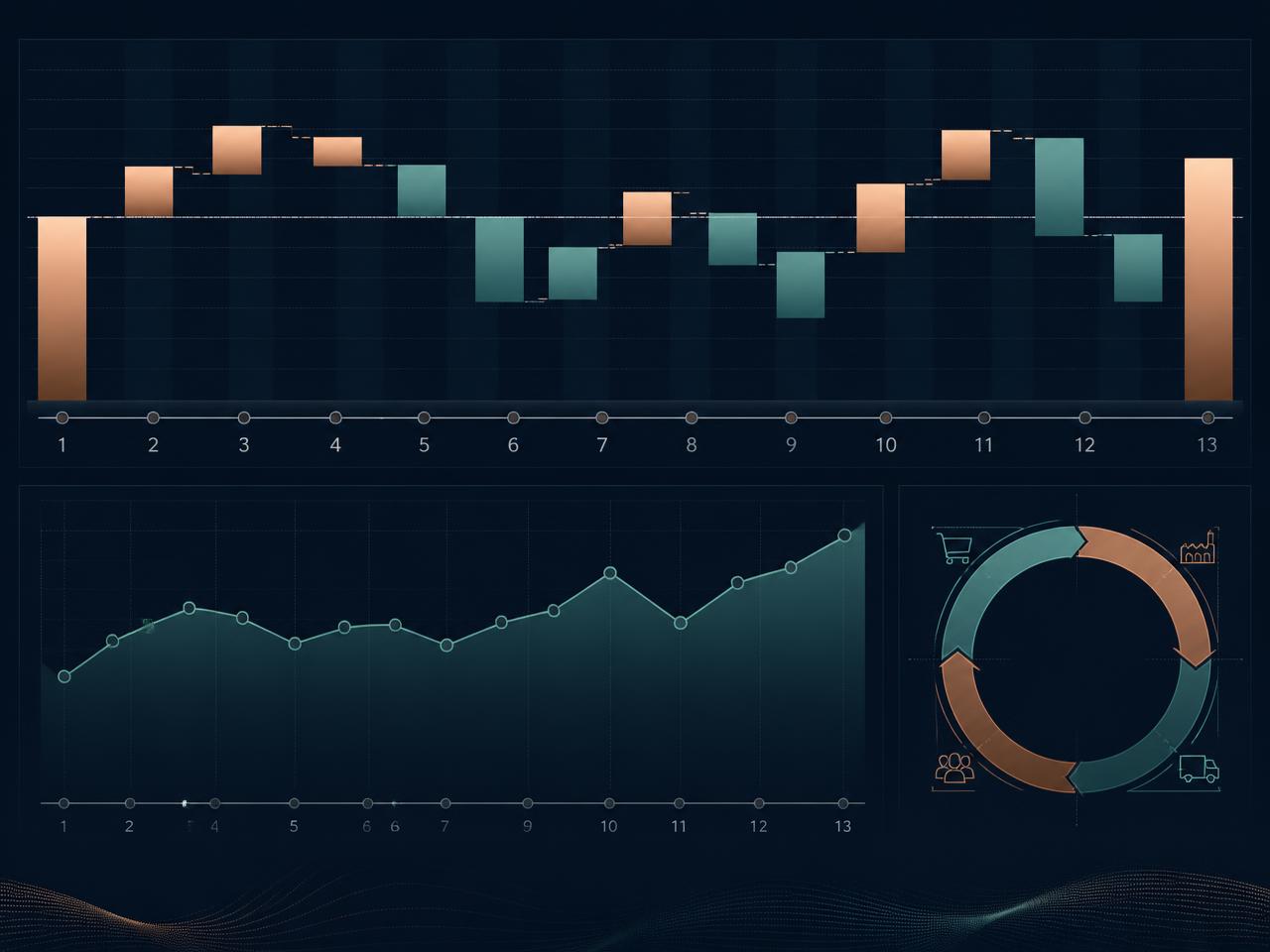
A 13-week cash forecast is one of the most practical tools available for short-term liquidity management. It puts receipts, payments, and weekly ending cash on a single timeline management can act on.
Weekly cash bridge
- Beginning Cash
- +Customer Collections
- +Other Receipts
- –Payroll
- –Vendor Payments
- –Taxes
- –Debt Service
- –Capital Spending
- =Ending Cash
The forecast should be updated on a regular cadence and compared against actual results, so assumptions about collection timing, payment runs, and seasonality get sharper every cycle.
Typical uses
- Liquidity monitoring
- Lender reporting
- Seasonal planning
- Acquisition integration
- Restructuring
- Growth planning
- Managing customer concentration
A 13-week forecast creates time to act.

Working capital
Understand Where Cash Is Tied Up in the Business
Working capital is often the largest source of hidden cash in a growing business. Receivables, inventory, and payables together determine how much of your own cash is funding day-to-day operations.
Accounts Receivable
- DSO
- Aging
- Overdue balances
- Collection trends
- Customer payment behavior
- Concentration risk
Inventory
- Inventory turns
- Slow-moving inventory
- Excess stock
- Purchasing patterns
- Service levels
- Cash tied up in inventory
Accounts Payable
- DPO
- Vendor terms
- Payment timing
- Early-payment decisions
- Supplier concentration
Cash conversion cycle
Receivable Days + Inventory Days – Payable Days
The goal is to understand how quickly operating activity converts into cash.
Cash conversion
How Fast Does Revenue Become Cash?
Consider a common pattern: the business sells today, collects in 60 days, pays employees this week, and pays vendors in 30 days. That gap has to be financed by someone—usually the company itself.
Why the cycle matters
Shortening the time between delivering work and collecting cash reduces borrowing needs and increases financial flexibility. Lengthening it quietly increases the amount of capital the business must carry.
Small improvements in working-capital days can create meaningful cash.
Potential actions
- Accelerate collections
- Improve billing timing
- Reduce invoice errors
- Negotiate payment terms
- Optimize inventory
- Reduce aged receivables
- Improve customer payment processes
Growth & cash
Growth Can Create a Cash Requirement Before It Creates a Return
Growth is rarely free. Before new revenue converts to cash, the business usually has to fund the capacity that produced it.
What growth typically requires
- Inventory
- Labor
- Hiring
- Equipment
- Receivables
- Marketing
- New locations
- Implementation costs
If revenue grows 20%, management should understand
- Additional receivables
- Additional inventory
- Payroll requirements
- Supplier payments
- Capital expenditures
- Required liquidity
The sequence
- Revenue Growth
- Working-Capital Investment
- Cash Requirement
- Future Profitability
The question is not only “Can we grow?” It is “Can we fund the growth?”
Collections analytics
Collections Should Be Managed With Data, Not Just Aging Reports
An aging report tells you what is late. It rarely tells you why, which customers are trending worse, or how much cash will actually land next week.
What management should also see
- Invoice timing
- Customer payment patterns
- Dispute frequency
- Concentration
- Delinquency trends
- Collector productivity
- Forecasted receipts
Potential deliverables
- Customer collection forecast
- Aged receivable dashboard
- DSO trends
- High-risk account list
- Collection priority analysis
- Cash receipt forecast
Better collections visibility improves both cash flow and forecast accuracy.
Scenario planning
Stress-Test Liquidity Before Conditions Change
Revenue Down 10%
What happens to cash?
Collections Slow by 15 Days
How much additional liquidity is required?
Major Customer Pays Late
What happens to weekly cash balances?
Inventory Increases 20%
How much cash is absorbed?
Add 10 Employees
What is the monthly and annual cash impact?
New Equipment Purchase
Can it be funded internally?
Acquisition
What liquidity is required at close and during integration?
Scenario planning helps management identify the point where liquidity pressure becomes a management action.
Our process
A Practical Cash & Working-Capital Process
Step 1
Assess
Review:
- Cash reporting
- Receivables
- Payables
- Inventory
- Debt
- CapEx
- Existing forecasts
Step 2
Build
Develop:
- 13-week cash forecast
- Longer-term cash model
- Working-capital metrics
Step 3
Validate
Confirm:
- Collection assumptions
- Payment timing
- Operational inputs
- Financing assumptions
Step 4
Manage
Establish:
- Weekly or monthly review cadence
- Accountability
- Exception reporting
- Action items
Step 5
Improve
Track:
- Forecast accuracy
- DSO
- Inventory
- DPO
- Cash conversion
- Action results
Cash management becomes much more effective when it is treated as an operating process rather than a bank-balance review.

Connected planning
Cash Forecasting Should Connect to the Business Forecast
Short-term cash planning should not live in a separate spreadsheet from the broader financial outlook. When the two are connected, one set of assumptions drives both.
- Revenue Forecast
- Profitability
- Working Capital
- Cash Flow
- Liquidity
What this lets management understand
- Whether growth creates cash
- Whether margins support investment
- Whether working capital requires financing
- Whether CapEx can be funded internally
- Whether debt capacity is sufficient
Cash planning is frequently delivered inside fractional FP&A support, or during interim FP&A leadership engagements. It also pairs closely with profitability analysis and budgeting & planning.
FAQ
Cash Flow & Working Capital Questions
What is a 13-week cash flow forecast?
It is a weekly view of expected cash receipts, cash payments, and ending cash balances over roughly one quarter. Each week shows collections, payroll, vendor payments, taxes, debt service, and capital spending so management can see where liquidity tightens before it happens.
Why 13 weeks?
Thirteen weeks is long enough to reveal emerging liquidity issues and seasonal timing, while still short enough to forecast at a practical level of detail with reasonable accuracy.
How often should a 13-week cash forecast be updated?
Typically weekly where liquidity management matters, with actual results compared to the prior forecast so accuracy and assumptions improve over time. Monthly updates can be appropriate for businesses with stable cash positions.
What is working capital?
In practical terms, working capital is the cash tied up in day-to-day operations: money customers owe you (receivables), product sitting on the shelf (inventory), and what you owe suppliers (payables). The larger the gap between what you have funded and what you have collected, the more cash the business consumes.
What is the cash conversion cycle?
It measures how long it takes for operating activity to turn into cash: receivable days plus inventory days, less payable days. A longer cycle means more cash is financed by the business; a shorter cycle frees up liquidity.
Why can a profitable company have cash flow problems?
Profit recognition and cash timing are different. Revenue is recorded when earned, not when collected. Growth, receivables, inventory, debt service, taxes, and capital spending can all consume cash while the income statement still looks healthy.
Can you help improve collections?
Yes. We support collection analytics, prioritization, receipt forecasting, and process improvement. Your team retains ownership of customer relationships and collection execution—we make the picture clearer and the priorities sharper.
Do you provide treasury services?
Our primary focus is forecasting, liquidity planning, working-capital analytics, and management decision support. Broader treasury requirements such as banking structure or debt administration can be evaluated based on scope.
Can cash forecasting be part of a broader fractional FP&A engagement?
Yes. Cash and working-capital planning is often integrated into recurring fractional FP&A support alongside forecasting, reporting, and decision support.
Next step
See Cash Needs Before They Become Cash Problems.
Build stronger visibility into liquidity, collections, working capital, and the cash impact of growth so management has more time and better information to act.
Serving privately held and PE-backed businesses throughout Greater Chicago and the Midwest.